

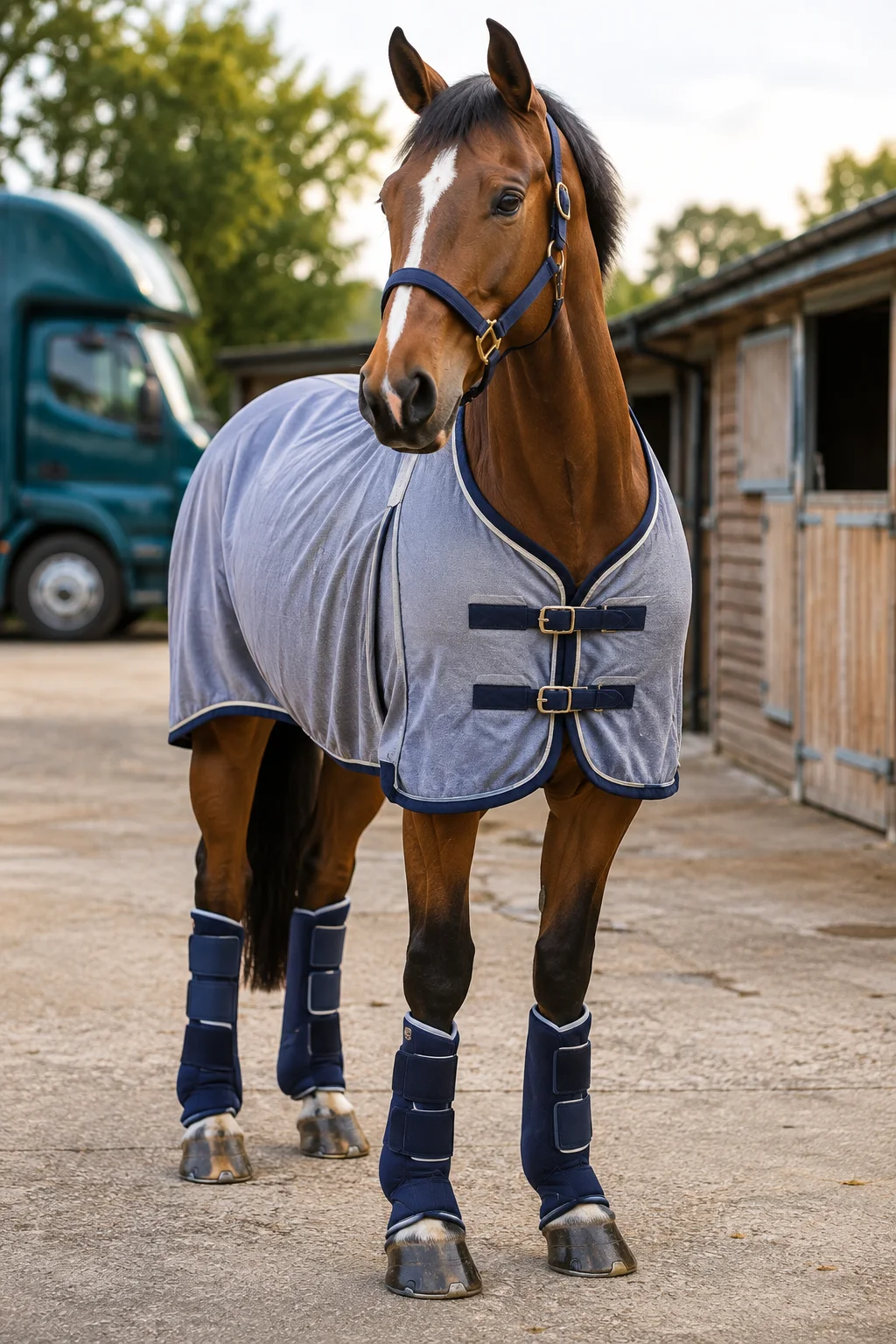

Choosing horse travel boots, rugs and tail protection looks simple in a tack shop, but the right kit depends on the horse, the vehicle, the weather and the length of the journey. Over-wrapping a horse on a warm day can do more harm than going without, while a horse that scrambles in a trailer needs proper leg protection every time.
This guide explains what each item does, when to use it and how to fit it, so you can dress your horse for the journey rather than for the catalogue photo.
Key points
- Leg protection prevents knocks and treads; it must fit well and stay put.
- Heat is a bigger risk than cold inside a moving vehicle. Too cool is better than too warm.
- Practise with new kit at home before the journey.
- Check and refit boots and tail guards at every rest stop on long trips.
Why horses need protection when they travel
A horse in a moving vehicle constantly shifts its feet to balance. Braking, cornering and roundabouts all produce small stumbles, and it is easy for a hoof to strike the opposite leg or for a leg to knock a partition. Coronet bands, heels and the backs of the fetlocks are especially vulnerable. Tails can rub raw against the ramp or breeching bar, and heads can be bumped when a horse throws its head up on loading.
Travel boots
Modern travel boots are padded, wrap-around boots that usually cover the leg from just below the knee or hock down over the coronet band and heel.
Advantages
- Quick to fit and remove, even by less experienced handlers.
- Good coverage of the coronet band and heel.
- Easy to check and refit at rest stops.
Disadvantages
- Poorly fitting boots can slip down and trip the horse, or spin round.
- Long boots can be warm on summer journeys.
- Some horses kick out when they first feel them, so introduce them at home.
Fitting tips
- Fasten from the top strap downwards on most designs, or follow the maker’s instructions.
- Make sure the boot sits evenly with the hoof protection over the coronet band but not dragging on the ground.
- Check that you can slide a finger under each strap.
- Walk the horse forward and back. The boots should not move.
Travel bandages and pads
Bandages over padding give a close, supportive fit that does not slip when applied correctly. Many experienced grooms prefer them for long journeys. The downside is that badly applied bandages can cause pressure damage to tendons, and they take longer to apply. If you choose bandages, learn from someone experienced and practise until each leg is even and firm but not tight. Add overreach boots in front to protect the heels, as bandages do not cover them.
Comparing the options
| Option | Best for | Watch out for |
|---|---|---|
| Full travel boots | Short and medium trips, quick changes, novice handlers | Slipping, heat on hot days |
| Bandages and pads | Long journeys, experienced handlers | Uneven pressure if poorly applied |
| Brushing plus overreach boots | Calm, experienced travellers on short hot-weather trips | Less coverage of hocks and knees |
| No leg protection | Very calm horses on short trips in hot weather, on veterinary or rider judgement | Risk of knocks if the horse scrambles |
Tail guards and tail bandages
A tail guard is a padded wrap that fastens around the dock, often attached to the rug’s roller or a surcingle to stop it slipping. It protects the tail if the horse leans on the breeching bar or ramp. Tail bandages do a similar job, but should never be left on for long periods because they can restrict circulation. Experienced long-distance travellers often advise refitting tail protection at every stop and removing bandages altogether on very long trips.
Rugs: less is usually more
Vehicles warm up quickly with horses on board. Research into long-distance horse transport has found high temperatures and humidity inside lorries, particularly when windows and vents are kept closed. Dehydration and heat stress are much more common travel problems than horses getting cold.
- Warm weather: a light cotton sheet or no rug at all, with vents and windows open.
- Mild weather: a thin fleece or cooler that wicks moisture away.
- Cold weather: a light rug, and check under it at stops. If the horse feels damp or hot, remove a layer.
- Clipped horses in winter: may need more, but avoid heavy stable rugs that cause sweating.
Feel behind the ears and under the rug at each stop. Sweat means the horse is too warm. Our guide to keeping horses hydrated while travelling explains why this matters so much.
Poll guards and headcollars
A padded poll guard attached to the headcollar protects the top of the head if a horse throws its head up while loading or in a low vehicle. Use a well-fitting leather headcollar or one with a breakable section, so that in an emergency the headcollar can break rather than trap the horse. Avoid travelling in a bridle unless you have a specific reason and someone is supervising.
What to pack for the journey
- Spare set of travel boots or bandages.
- Lighter and heavier rug options to adjust for the weather.
- Haynets, water buckets and water from home.
- First aid kit, including wound dressing and a thermometer.
- Spare headcollar and lead rope.
- Horse passport, which must travel with the horse. See our horse passport guide.
Introducing new kit
Put new boots on in the stable, walk the horse round the yard and let it get used to the feeling before loading. Some horses lift their legs high or kick out at first. It is far better to discover that at home than halfway up a ramp. Our step-by-step guide to how to load a horse covers the rest of the preparation.
Frequently asked questions
Are horse travel boots better than bandages?
Neither is better for every horse. Boots are quicker and easier; bandages can be more secure on long trips if applied well. Choose what you can fit correctly every time.
Should my horse wear a rug when travelling?
Often only a light sheet, or nothing in warm weather. Vehicles heat up quickly, so dress for conditions inside the box, not outside.
Do horses need knee and hock boots?
Many full travel boots cover hocks and knees. Separate knee or hock boots can help horses that scramble or lean, but they must be fitted correctly so they do not slip.
Summary
Good travel kit protects legs, tail and head without overheating the horse. Choose kit you can fit well, practise with it at home and adjust it to the weather on the day. The British Horse Society has more advice on preparing to travel.