

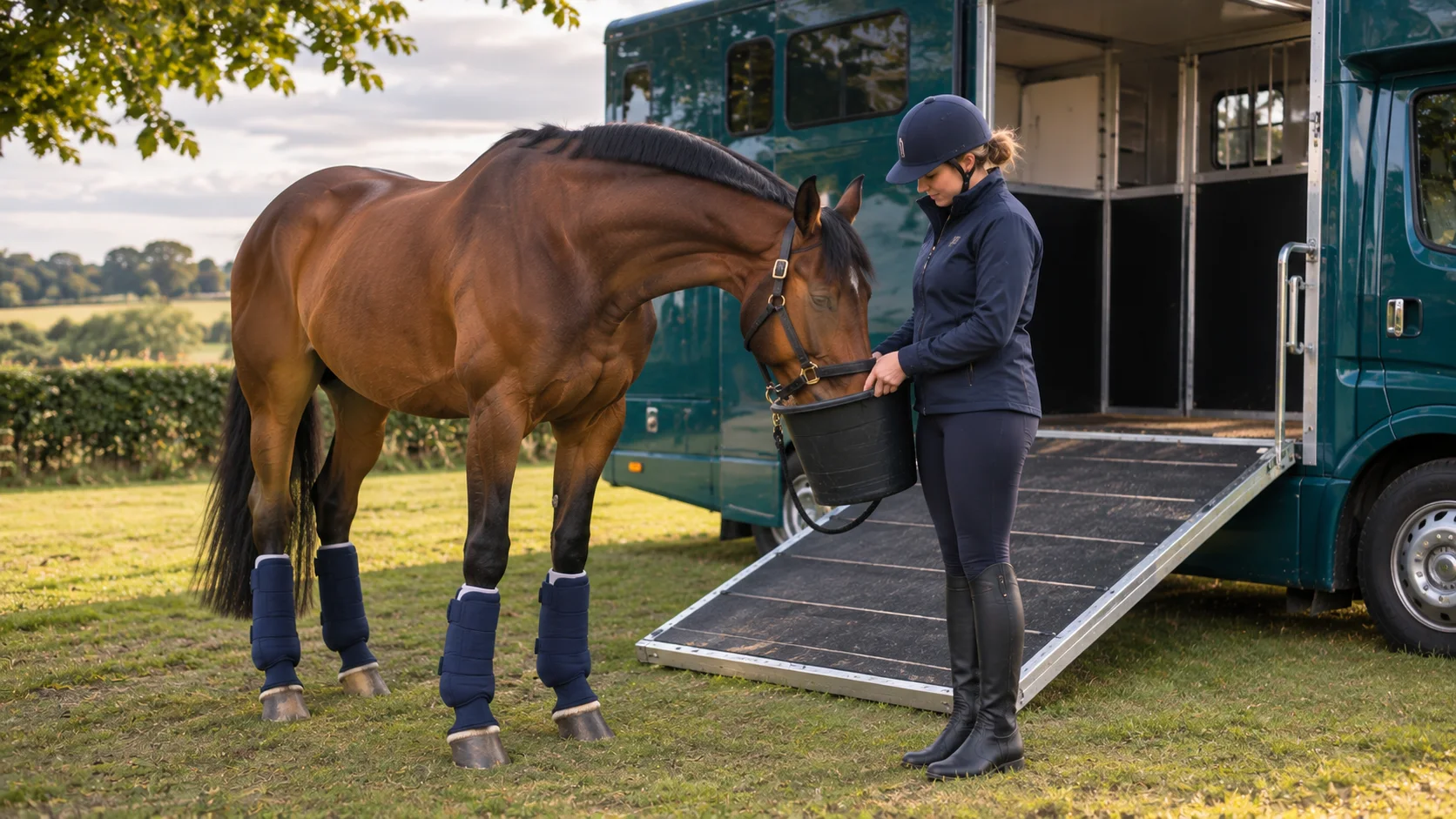

Keeping horses hydrated on the road is one of the simplest ways to protect their health, and one of the most overlooked. Horses often drink little or nothing while a vehicle is moving, they sweat in warm, humid lorries and trailers, and dehydration increases the risk of colic, respiratory problems and slow recovery after a journey.
This guide covers how to prepare before you leave, how often to offer water, how to encourage a fussy drinker, and how to spot dehydration early.
Key points
- Give free access to water and forage for several hours before a journey.
- On longer trips, stop and offer water roughly every four hours, more often in hot weather.
- Ventilation matters: open vents and windows to reduce heat and humidity.
- Take water from home if your horse is fussy about the taste of unfamiliar water.
Why horses dehydrate when travelling
Standing in a moving vehicle is physical work. Horses use muscles constantly to balance, which produces heat. Lorries and trailers can become warm and humid quickly, especially with several horses on board or windows closed. Studies of long-distance transport have recorded very high humidity inside lorries for hours at a time. At the same time, many horses simply will not drink while moving, so they lose fluid without replacing it.
Hay plays a hidden role. Fibre in the gut holds water like a reservoir, which is why horses that eat forage on the journey tend to cope better than those that do not.
Before you leave
- Six hours of free access. Official welfare guidance for equines recommends that horses have forage and an unrestricted supply of clean water for at least six hours before a journey.
- Soaked or dampened hay. Dampening hay reduces dust and adds water. Do not leave wet hay in the vehicle for days, as it can go mouldy.
- Wet feeds. A sloppy mash before travel adds fluid.
- Electrolytes, if advised. For long journeys or hot weather, your vet may suggest electrolytes before travel. Always offer plain water alongside.
- Check the weather. In a heatwave, travel early or late in the day, or postpone non-essential journeys.
How often to offer water on the road
For short local trips, such as a 30-minute drive to a lesson, most healthy horses do not need water on the way. For longer journeys, aim to stop and offer water about every four hours. Equine welfare guidance in the UK suggests short rest stops around every four hours with access to water and forage, and recommends keeping single journeys under 12 hours. In hot weather, offer water more often.
| Journey length | Water plan |
|---|---|
| Under 2 hours | Water before leaving and on arrival |
| 2 to 4 hours | Offer water on arrival; consider one stop in hot weather |
| 4 to 8 hours | Stop every 3 to 4 hours, offer water and hay, check the horse |
| Over 8 hours | Plan stops every 3 to 4 hours, consider an overnight break; see our guide to long-distance horse travel |
Encouraging a horse to drink
- Bring water from home. Many horses refuse water that smells or tastes different. Large water carriers or a tank on the lorry solve this.
- Familiar buckets. Use the horse’s own bucket.
- Flavour the water. Some owners add a little apple juice or sugar beet water at home in the weeks before travel, then do the same on the road so the taste is familiar.
- Offer quietly. Give the horse time with the bucket. Some drink only once the engine is off and the vehicle is still.
- Lower the head. Offering water and hay low lets the horse drop its head, which also helps clear the airways.
Ventilation and temperature
Open roof vents and windows unless it is very cold, and use any fans fitted to the vehicle. Never leave a loaded vehicle parked in full sun with the ramps closed. At stops, park in shade where possible and lower ramps or open side doors to let air through, if it is safe to do so. Dress horses lightly; heavy rugs make sweating and dehydration worse. Our guide to what your horse should wear to travel covers this.
How to spot dehydration
- Dull or tired demeanour, reduced interest in food.
- Dry, tacky gums.
- Slow capillary refill: press the gum until it whitens and see how quickly the colour returns.
- Skin pinch on the neck that stays tented rather than springing back. This test is a rough guide only.
- Dark, small amounts of urine, or fewer droppings than usual.
- Sunken eyes in more severe cases.
Take your horse’s temperature before and after long journeys so you know what is normal. A raised temperature after travel can indicate dehydration or the start of a respiratory infection. Our guide to travel sickness in horses explains the warning signs that need a vet.
After arrival
Offer water straight away and again after the horse has settled. Give forage before hard feed. If your horse has been on a long journey, allow time to recover before competing or working hard; recovery can take longer than people expect, especially after a trip over several hours.
Hot-weather checklist
- Travel in the cooler part of the day.
- Fill water containers before you leave, and carry more than you think you will need.
- Open every vent and window, and consider removing leg protection on calm horses for short trips.
- Plan stops in shaded places.
- Check horses at every stop: sweat, breathing rate and interest in water.
- Have a plan for heavy traffic, such as closures on the A12 or delays around the M25, where you could be stationary for a long time.
Frequently asked questions
Will my horse drink from a bucket in the trailer?
Many will once the vehicle is stationary and quiet. Offer water at every stop even if the horse refused last time.
Can I leave water in the trailer while driving?
Buckets spill and can injure a horse. Offer water during stops instead, unless your vehicle has fitted drinkers designed for travel.
Should I give electrolytes?
They can help on long or hot journeys, but ask your vet, and always provide plain water too.
Summary
Water and forage before you go, regular stops on longer journeys, good ventilation and careful observation will keep most horses well hydrated. For official welfare guidance during transport, see GOV.UK.