

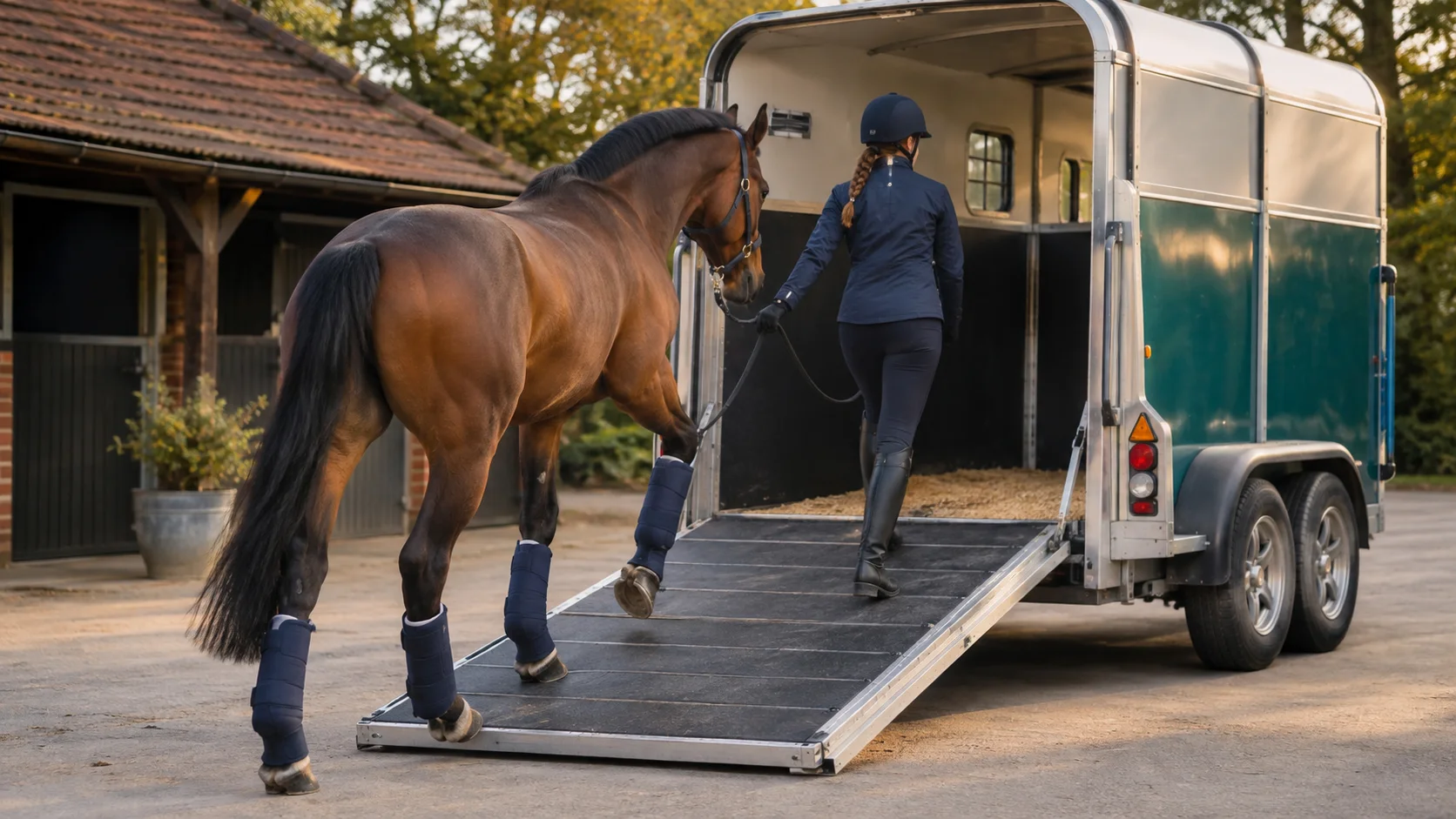

Knowing how to load a horse calmly and safely is the single most useful transport skill an owner can have. Most loading problems do not start on the ramp. They start with a rushed morning, a dark trailer, a handler standing in the wrong place, or a horse that has only ever been loaded when something stressful was about to happen.
This step-by-step guide covers preparation, the loading sequence for trailers and horseboxes, unloading, and what to do with a horse that says no. Safety first: if a horse has a history of rearing, going over backwards or panicking in a vehicle, get help from an experienced professional rather than working alone.
Key points
- Practise loading at home, on quiet days, long before you need to travel.
- Wear a hat, gloves and sturdy boots, and use a bridle or well-fitted headcollar with a long rope.
- When loading: close the breeching bar or ramp before you tie the horse up.
- When unloading: untie the horse before you open the breeching bar or lower the front ramp.
Before loading day: preparation at home
A horse that walks onto a trailer happily has usually done it many times without anything bad happening afterwards. Build that history at home:
- Lead in hand well. Your horse should walk on, halt and back up from light pressure, and stand still when asked. Loading is just leading into a small space.
- Make the vehicle boring. Park it in the field or yard. Feed near the ramp, then on the ramp, then just inside.
- Short sessions. Ten calm minutes that end on a good step are worth more than an hour that ends in a fight.
- Load and go nowhere. Walk on, have a hay net, walk off. Repeat over several days.
Set the vehicle up properly
Horses are naturally wary of dark, narrow, noisy spaces. Make the trailer or horsebox as inviting as possible before you fetch the horse.
- Park on level, non-slip ground, ideally with the ramp against a wall or fence on one side.
- Check the ramp springs, hinges and surface. A ramp that bounces or rings under a hoof can frighten a horse.
- Open the front ramp or jockey door if your trailer has one, so the horse sees light ahead.
- Swing the partition across to make the space feel wider, and secure it.
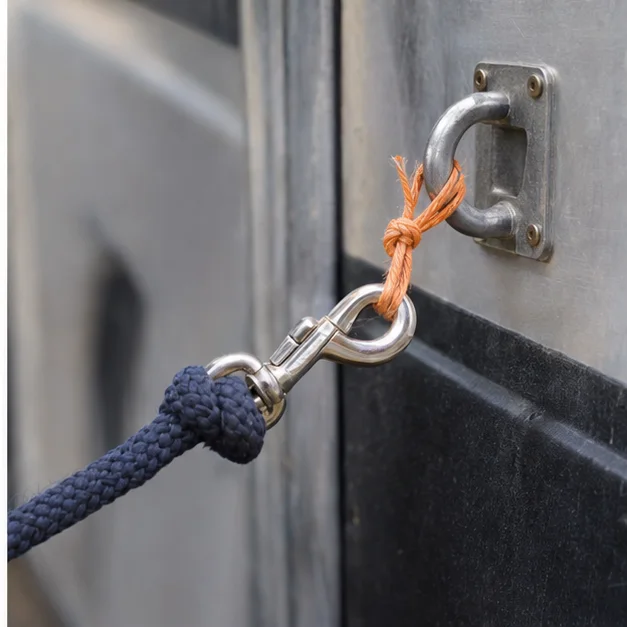
- Hang a full hay net at the front and tie a loop of breakable baler twine to the tie ring.
- Open windows and roof vents for light and air.
Step by step: loading a horse
- Dress the horse for travel. Fit travel boots or bandages, a tail guard if used, and a well-fitting headcollar. Bring a bridle for extra control if needed. Our guide to travel boots and rugs explains the options.
- Walk a straight approach. Line the horse up several metres back so it walks straight up the centre of the ramp. Look ahead into the vehicle, not back at the horse.
- Stay at the shoulder. Walk beside the horse’s shoulder with a long lead rope, never directly in front where you could be trapped.
- Let the horse look. A pause at the bottom of the ramp is normal. Allow a sniff, then ask again with light forward pressure and release as soon as the horse steps forward.
- Walk in and keep moving to the front. If you need to, go through the front exit or step under the breast bar only if your vehicle is designed for it.
- Helper closes the back. A helper, standing to the side and never directly behind, fastens the breeching bar or strap, then raises the ramp.
- Now tie up. Only once the back is secure, tie the horse to the twine loop with a quick-release knot. Keep the rope short enough that the horse cannot turn round, but long enough to balance.
- Final check. Ramps secure, partitions locked, groom door shut, hay net within reach.
Loading a horse: the four key moments
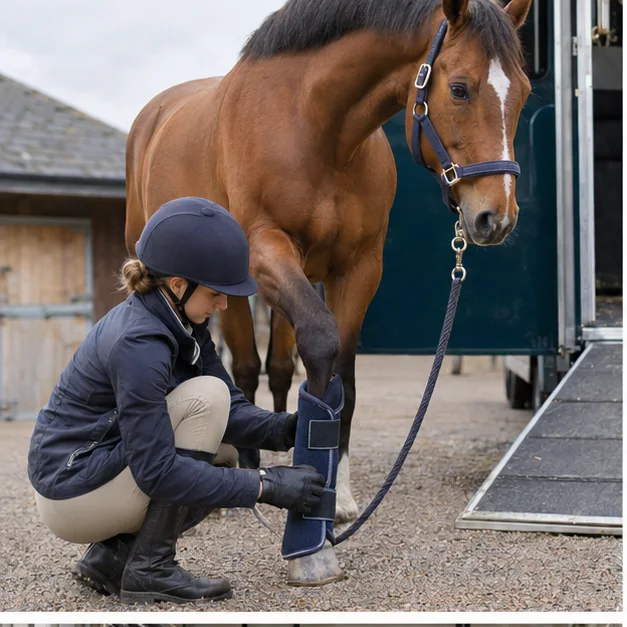
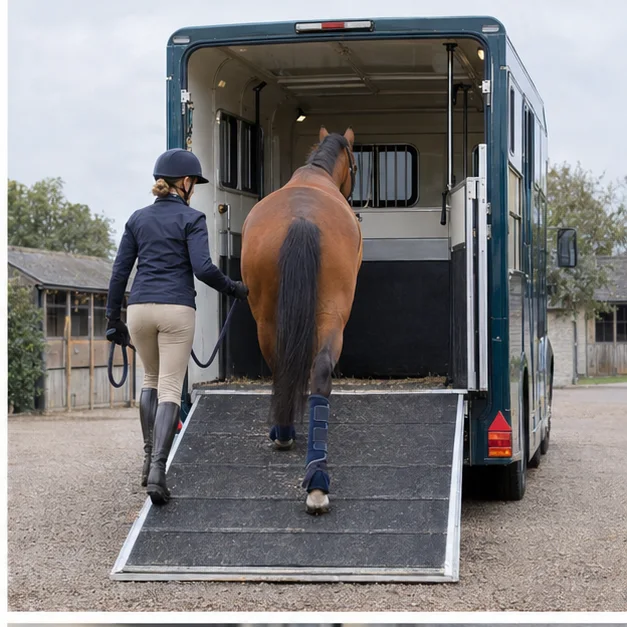
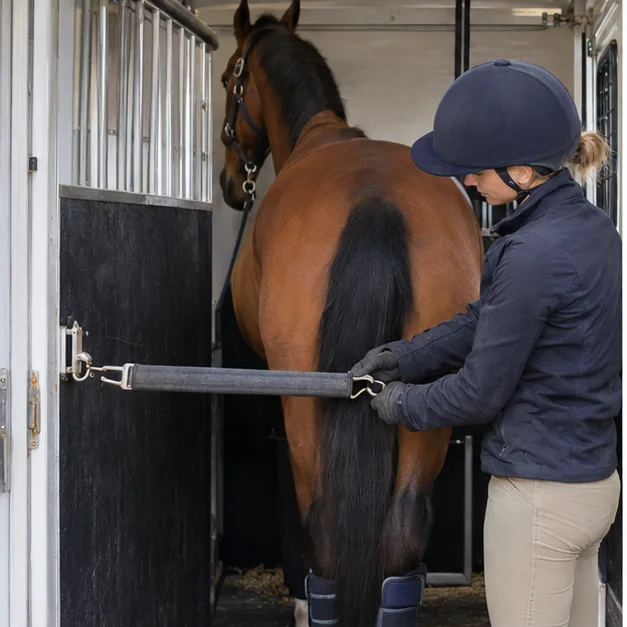
The order matters. A horse tied up before the back is closed can run backwards, hit the end of the rope and panic. A horse still tied when the back is opened can do the same in reverse.
Step by step: unloading safely
- Lower the front ramp if your trailer has one and you unload forwards.
- Untie the horse first, keeping hold of the lead rope.
- Your helper then undoes the breeching bar or opens the rear ramp, standing to one side.
- Back the horse out slowly and straight, or lead it forwards down the front ramp. Ask for one step at a time.
- Walk the horse forward a few steps once all four feet are on the ground, and let it look around.
When a horse will not load
Refusal is communication. The horse is worried, uncomfortable or confused. Common reasons include a past bad journey, pain (teeth, back, feet), a dark or cramped space, rushing, or a handler who has become tense.
What usually helps
- Slow down. Allow far more time than you think you need. Clock-watching transmits stress.
- Reward small tries. Release pressure and praise every forward step, even a weight shift.
- Use a calm companion. A sensible horse loaded first can give a nervous one confidence.
- Make it brighter and bigger. Partition fully across, front ramp down, lights on.
- Get professional help from a trainer experienced in loading problems.
What to avoid
- Two people linking arms or a lunge line behind the horse unless you are trained in the technique and the horse is used to it.
- Standing directly behind the horse or under the ramp.
- Shouting, hitting or chasing. Fear makes the next attempt harder.
- Sedation without a vet’s advice. A sedated horse can struggle to balance on the move.
Trailer or horsebox: what changes
Rear-ramp trailers ask the horse to walk into a narrow space and usually to reverse out. Front-unload trailers let horses walk out forwards, which many prefer. Horseboxes often have side ramps and herringbone stalls, so the horse walks up, turns and stands at an angle. Ramps on lorries can be steeper, so check the angle and park where the ramp sits as flat as possible. If you are still choosing a vehicle, our comparison of horse trailer vs horsebox covers loading as one of the key differences.
After the journey
Check legs, boots and tail on arrival, offer water and let the horse settle before work. Watch for signs of stress or illness after longer trips; our guide to travel sickness in horses lists what to look for.
Frequently asked questions
How long should I spend teaching a horse to load?
As long as it takes, spread over several short sessions. Many horses improve within a week of calm daily practice.
Should I tie my horse in a trailer?
Most owners tie horses for travel so they cannot turn or bite a neighbour, using a quick-release knot to breakable twine. Some trailers and boxes are designed for loose travel. Follow the manufacturer’s advice and never tie before the back is secure.
Is it legal to travel in the trailer with my horse?
No. It is illegal to travel in the back of a trailer or horsebox with your horse while it is moving.
Summary
Loading is a skill for both horse and handler. Prepare at home, set the vehicle up to look inviting, follow a safe sequence every time, and keep calm when things do not go to plan. For wider welfare guidance, the British Horse Society publishes advice on transporting your horse.