

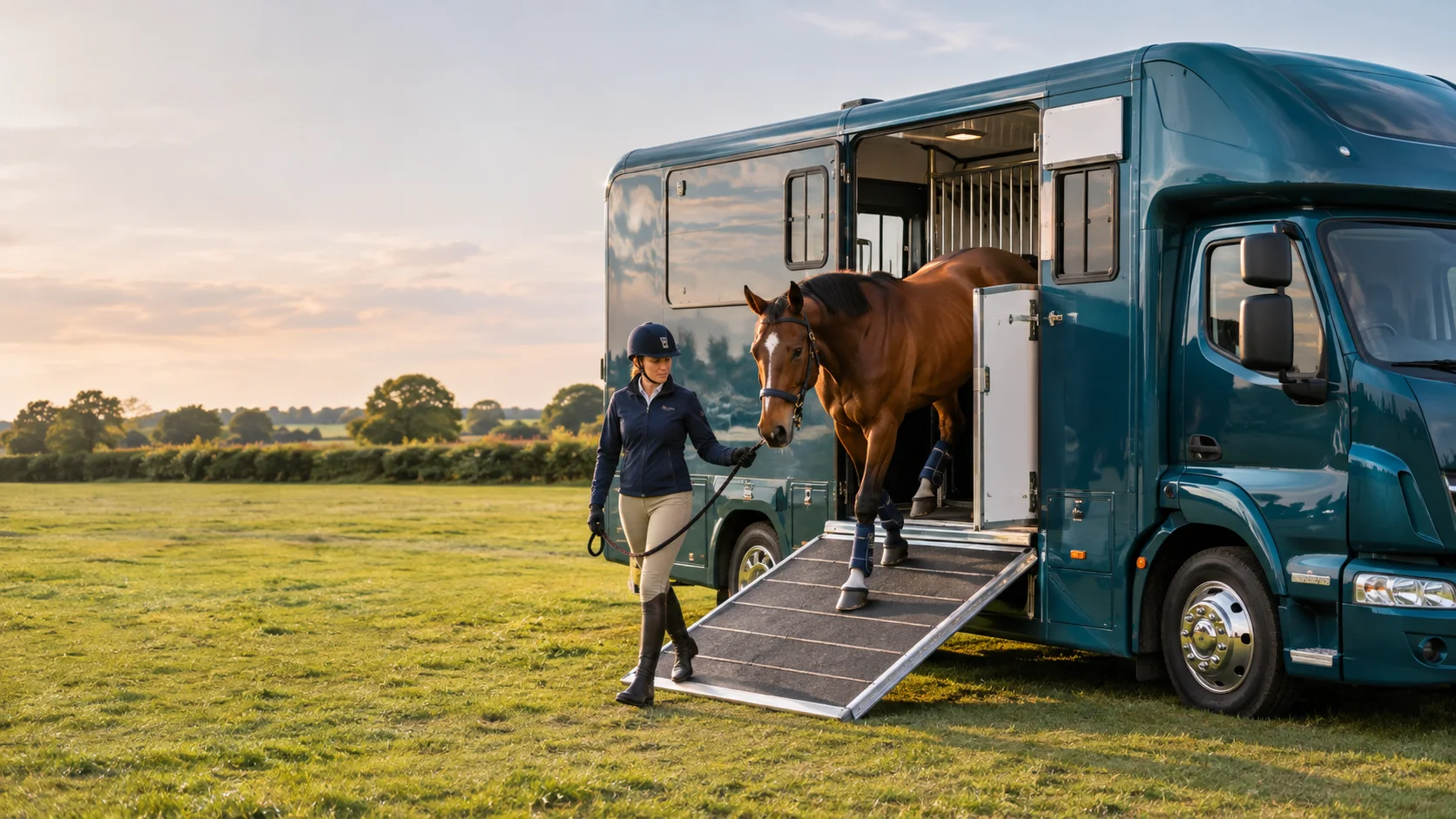

Buying a used horsebox is one of the biggest purchases most horse owners make, and one of the easiest to get wrong. A smart paint job and new matting can hide a rotten floor, an overweight build, missing paperwork or a base vehicle near the end of its life. The good news is that most problems can be found before you pay, if you know where to look and take your time.
This guide walks through choosing the right size, the paperwork to check, a practical inspection routine, the test drive and the questions to ask the seller.
Key points
- Decide the plated weight you can legally drive before you start looking.
- Weigh the box, or insist on a recent weighbridge ticket, to confirm the real payload.
- Lift the matting and check the floor and chassis underneath.
- Check the V5C, MOT or annual test history, plating certificate and any conversion paperwork.
Step 1: Decide what you need
- Licence: a car licence covers up to 3,500kg; heavier boxes need C1 or C. See our guide to the licence to drive a horsebox.
- Horses: how many, how big, and how heavy? Two large horses rarely fit legally in a 3.5 tonne box.
- Use: local lessons and hacks, weekend shows, or long trips with overnight stays? Living space adds weight and cost.
- Parking: where will it live? Height, length and access to your yard all matter.
- Budget: include insurance, breakdown cover, servicing, tyres, tests and a contingency for repairs.
If you are undecided between a lorry and a car and trailer, read our comparison of horse trailer vs horsebox first.
Step 2: Check the paperwork before you travel to view
- V5C logbook: the seller should be the registered keeper. Check the VIN, body type and plated weight match the vehicle.
- MOT or annual test history: use the free GOV.UK MOT history service to see past failures and advisories, including mileage records.
- Plating certificate: boxes over 3,500kg should have a ministry plate and plating certificate showing gross and axle weights.
- Weighbridge ticket: ideally recent and showing the vehicle as it is offered for sale.
- Conversion details: who built the horse area, when, and with what floor and frame materials.
- Service history: receipts for the base vehicle and the coachwork.
- History check: a vehicle history check for outstanding finance, write-offs and theft records.
Step 3: Inspect the horse area
- Floor: lift the matting and probe the floor and ramp. Our guide on how to check a horsebox floor explains exactly what to look for. If the seller refuses, walk away or pay for a professional inspection.
- Chassis and subframe: look underneath for rust, cracks, poor welding or recent underseal hiding repairs.
- Partitions and bars: robust, smooth, padded and quick to release.
- Ramps: springs and struts that make lifting manageable, solid hinges and a grippy surface.
- Ventilation and light: roof vents, opening windows with grilles, internal lights.
- Size: enough length and headroom for your horses to travel comfortably and balance.
Step 4: Inspect the base vehicle
- Engine starts easily from cold, with no heavy smoke, knocking or warning lights.
- Gearbox and clutch smooth; check the clutch biting point.
- Brakes pull up straight without noise or vibration.
- Tyres even wear, recent date codes, matching sizes and load ratings.
- Rust on the cab, especially wheel arches, sills and around the windscreen.
- Fluid leaks under the engine and axles.
- Living area, if fitted: damp, gas and electrical safety, water system leaks.
Step 5: Confirm the payload
This is the step buyers skip most often. Take the unladen weight from a weighbridge ticket and subtract it from the plated weight. Then subtract your horses, people, water, fuel and kit. If the answer is close to zero or negative, the box will not do the job legally. Our guide to horsebox weight and payload includes a worked example.
Step 6: Test drive
- Drive on a mix of roads, including a dual carriageway if possible.
- Listen for knocks over bumps and whines from the axle.
- Check the steering is straight and stable at speed.
- Do an emergency stop at low speed in a safe place.
- Check the ramp opens and closes easily after the drive.
- Check for new warning lights or leaks afterwards.
Questions to ask the seller
- Why are you selling, and how long have you owned it?
- When was the floor last inspected, and by whom?
- Has it ever been weighed? Can I see the ticket?
- How many horses have you carried, and how big were they?
- Any accident damage or major repairs?
- Is there outstanding finance?
- Can my mechanic or a horsebox specialist inspect it?
Red flags
- No V5C, or a seller who is not the registered keeper.
- Brand-new matting bonded down so the floor cannot be seen.
- A 3.5 tonne box advertised as “carries two big horses” without a weighbridge ticket.
- Fresh underseal over the chassis with no explanation.
- Pressure to pay a deposit before viewing.
- A price well below similar boxes.
Dealer or private sale?
Buying from a business gives you stronger consumer rights, and many horsebox dealers offer warranties and prepare vehicles before sale. Private sales are often cheaper, but you have fewer remedies if something goes wrong, so a professional inspection becomes even more valuable. Either way, pay by a traceable method and get a written receipt with the vehicle details.
After you buy
- Arrange insurance and equine breakdown cover before you drive away.
- Tax the vehicle in your name and update the V5C.
- Have it serviced and the floor inspected by your own mechanic.
- Weigh it with your usual load.
- Practise driving and manoeuvring empty before the first trip with horses.
Frequently asked questions
How old is too old for a horsebox?
Condition matters more than age. A well-maintained older lorry can be safer than a neglected newer one, but parts availability, emissions zones and fuel costs are worth considering.
Should I get a horsebox inspected before buying?
Yes, especially for private sales. A specialist inspection costs far less than a new floor or chassis repairs.
Can I drive a horsebox home on my car licence?
Only if it is plated at 3,500kg or less, or your licence covers the higher category, and you are insured.
Summary
Choose the size you can drive legally, check the paperwork, lift the matting, weigh it and test drive it properly. If anything does not add up, keep looking. For official information, check the vehicle’s MOT history on GOV.UK before you view.