

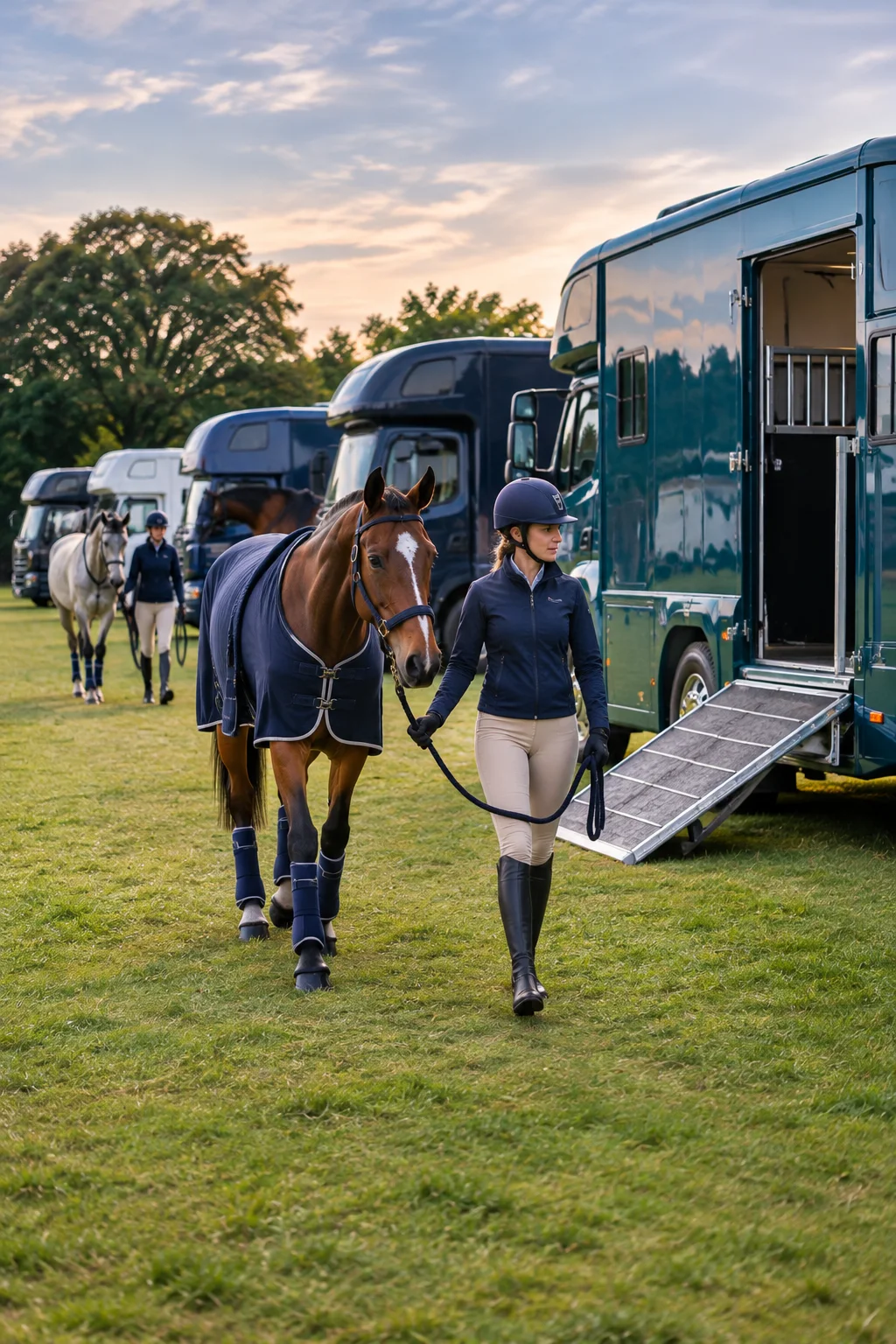

Hiring a professional horse transporter makes sense when you do not own a vehicle, when a journey is too long or complex to do yourself, or when you simply want an experienced team to move your horse safely. The difference between a good transporter and a poor one is huge, and it is not always obvious from a website. The right questions, asked before you book, reveal most of what you need to know.
This guide explains what a professional should hold, the questions to ask, what a good quote includes and the warning signs that should make you look elsewhere.
Key points
- Commercial transporters on journeys over 65km need a transporter authorisation and certificates of competence.
- Ask about vehicles, staff, insurance, routes, rest stops and what happens in a breakdown.
- Get a written quote that lists everything included.
- Your horse’s passport must travel with it.
What a professional transporter should hold
| Document or requirement | Why it matters |
|---|---|
| Transporter authorisation (type 1 or type 2) | Required for animal transport in connection with an economic activity over 65km; type 2 for journeys over eight hours |
| Certificate of competence for drivers and attendants | Shows staff are trained in animal welfare in transport |
| Vehicle approval (long journeys) | Vehicles used on journeys over eight hours must be inspected and approved |
| Operator licence (vehicles over 3,500kg) | Shows the business is licensed to operate goods vehicles |
| Correct driving licence categories | C1 or C for heavier lorries |
| Goods in transit or equivalent insurance | Covers your horse while in their care, within policy terms |
These requirements are explained in more depth in our guide to transporter authorisations. A reputable business will happily show you its documents or quote the reference numbers.
Questions to ask before you book
About the business
- How long have you been transporting horses?
- Can you send copies of your transporter authorisation and insurance?
- Do you subcontract journeys to other operators?
About the vehicle
- What vehicle will be used, and how many horses will be on board?
- Is there CCTV so the driver can watch the horses?
- How are partitions arranged, and can my horse have extra space?
- Is the vehicle cleaned and disinfected between loads?
About the journey
- Which route, and how long will my horse be on the vehicle?
- Will you collect or drop off other horses on the way?
- How often do you stop to offer water and forage?
- Who travels with the horses, and what experience do they have?
- What happens if there is a breakdown or a delay?
About your horse
- Can you handle horses that are nervous to load or travel?
- What travel kit do you prefer: boots, rugs, headcollars?
- How will you keep me updated during the journey?
What a good quote includes
- Collection and delivery addresses, dates and approximate times.
- Whether the trip is sole use or shared with other horses.
- Waiting time charges and what happens if loading takes longer.
- Ferry, toll, border or overnight costs for longer trips.
- Insurance cover and any limits.
- Cancellation terms.
Prices vary with distance, vehicle size, sole or shared use, timing and complexity. Our guide to horse transport costs explains the main factors.
Warning signs
- No transporter authorisation for a commercial journey over 65km.
- Reluctance to share insurance details.
- Cash-only payment with no written quote or receipt.
- Vague answers about the route, stops or other horses on board.
- A vehicle that looks poorly maintained or dirty.
- Pressure to book immediately with a large deposit.
Preparing for collection
- Have the passport ready to hand over.
- Tell the transporter about your horse’s temperament, health and any medication.
- Prepare a bag with a headcollar, lead rope, haynet and any feed for the journey.
- Have the horse groomed, dry and ready at the agreed time.
- Agree how you will be updated and when to expect arrival.
Friends, neighbours and informal lifts
Many owners help each other with lifts. That is perfectly normal for leisure, but if someone regularly charges for moving horses, they may need the same authorisations, licences and insurance as a professional. If an informal arrangement goes wrong, insurance may not cover it. Our guide to horsebox operator licences explains where the line usually falls.
Frequently asked questions
How do I check a transporter’s authorisation?
Ask for a copy and the authorisation number. Type 2 authorised transporters in Great Britain are published by the government, and the Animal and Plant Health Agency can help with queries.
Should I travel with my horse?
You cannot travel in the horse area. Some transporters have space in the cab, but many prefer owners to meet the horse at the destination.
Is shared transport safe?
Shared loads are common and usually cheaper. Ask how horses are separated, how long your horse will be on board and whether horses from different yards travel together.
Summary
Check authorisations and insurance, ask detailed questions about the vehicle and journey, get a written quote and prepare your horse for collection. A good transporter will welcome the questions. For the official requirements, see GOV.UK guidance on transporting animals.